
Enhance your behavioral research with our automatic tracking system, developed with a deep understanding of the researcher’s needs.
Disheartened by the way behavioral research tools were falling behind, our founders decided it was time science got an upgrade. We reinvented the traditional approach by eliminating fixed desktop installations and outdated business models, and adopted a more modern, accessible tool: smartphones.
Forget about expensive camera setups and dedicated desktop computers. Simply install the BehaviorCloud Camera app and start streaming video of your tests directly to your BehaviorCloud account for analysis. Efficient research shouldn’t come with a hefty price tag.
Say goodbye to confining research rooms and thumb drives. Your data is streamed live to your BehaviorCloud account, allowing for instant access and automated analysis from anywhere in the world through your browser. Research now fits into the palm of your hand.
Don’t waste time attempting to create the perfect graph or plot. BehaviorCloud automatically generates publication-ready images and videos that can be easily downloaded from your account.
Join over 500 labs improving their behavioral research efficiency and collaboration with BehaviorCloud. No credit card required.
Simply print our distance calibration pattern and place it in the maze. The BehaviorCloud Camera app automatically calibrates the distance, applying it to all your trials for accurate distance and velocity measurements in any maze setup.
Catering to single or multiple simultaneous subjects, swiftly configure and start trials through a mobile or desktop browser. Pairing additional phones to your account allows you to conduct an unlimited number of trials in parallel.
BehaviorCloud efficiently tracks any subject against a static background, regardless of the contrast. Suitable for maze-based tests or home cage observations, take control of your research process.
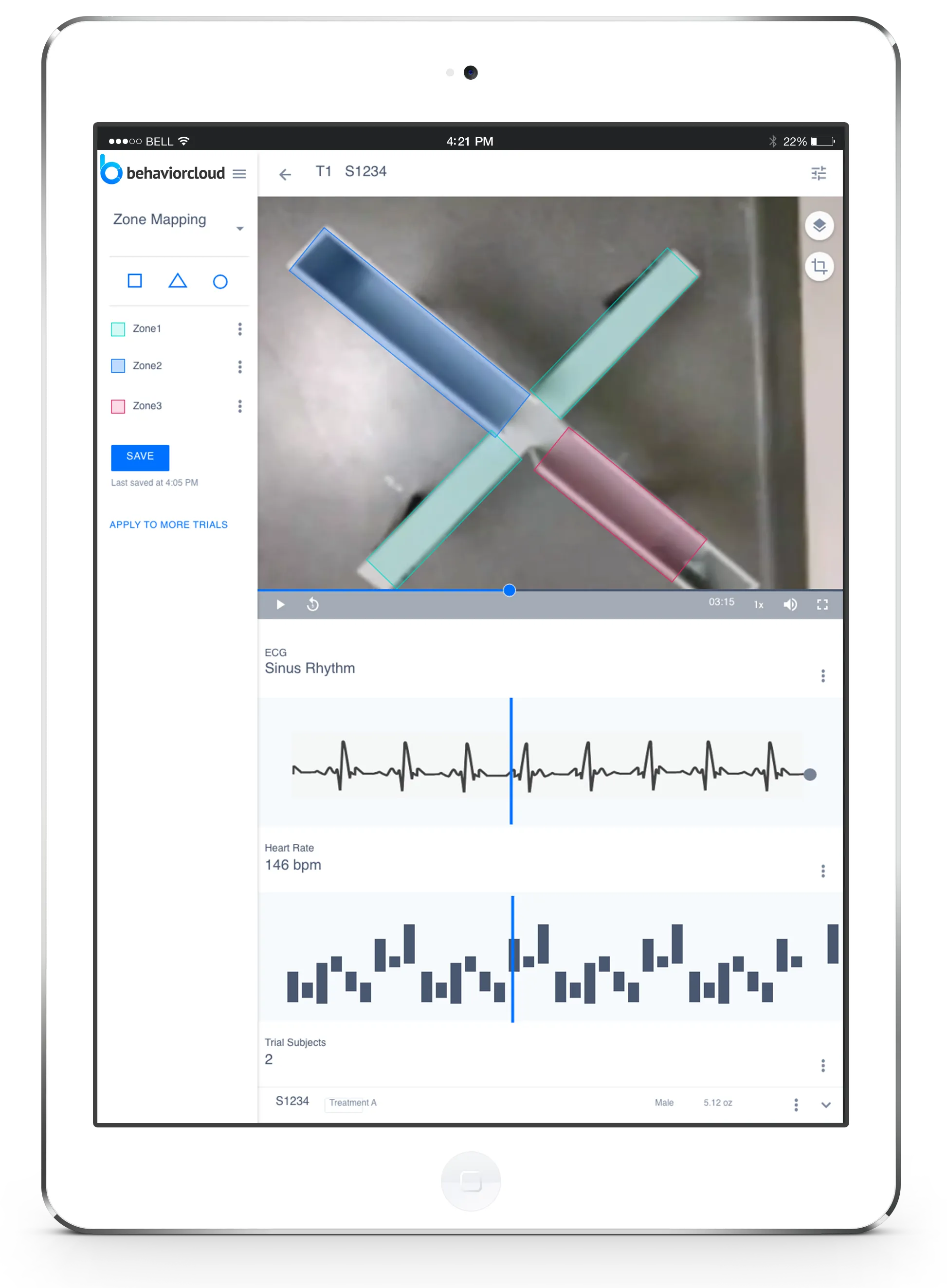
Design simple or complex zone maps through your browser to generate various variables, including zone latency, number of entries, distance traveled, resting time, zone sequence, and spontaneous alternation.