
The Morris Water Maze is a cognitive test widely used in behavioral neuroscience for assessing spatial learning and memory, predominantly in rodents. It was developed by Richard Morris in 1981.
The apparatus consists of a large circular pool filled with opaque water, within which a small platform is submerged. The pool is divided into four imaginary quadrants and is surrounded by various visual cues. The platform, hidden just below the water’s surface, is located in one of these quadrants.
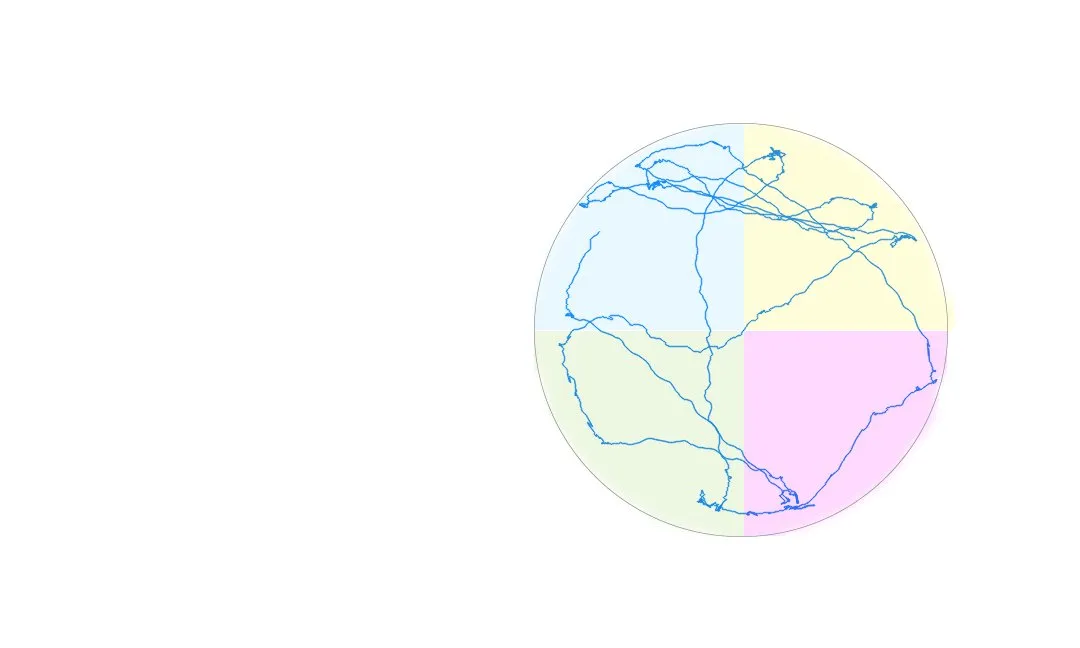
In a typical experiment, a rodent is placed in the pool and must navigate to the hidden platform to escape the water. Initially, the rodent swims randomly to find the platform. However, over several trials, it starts using the visual cues around the pool to directly navigate to the hidden platform, displaying spatial learning.
After multiple trials, a probe trial is conducted where the platform is removed. The amount of time the rodent spends in the quadrant where the platform was previously located is taken as an indicator of memory retention.
The Morris Water Maze is lauded for its ecological validity as it simulates a real-life situation where an animal uses landmarks to navigate to a specific location. It has been widely employed in studying the effects of neural damage, drugs, aging, stress, and diseases like Alzheimer’s on spatial learning and memory.
Easily track animal behavior in the Water Maze without the need for expensive equipment or software. Begin your research in under a minute with BehaviorCloud.
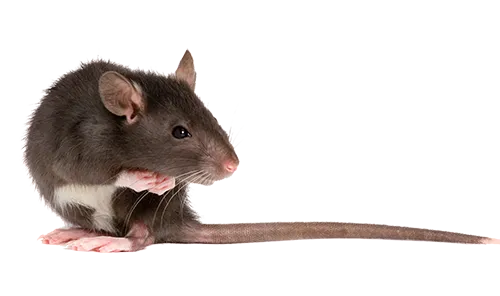
The Morris Water Maze is a widely used experimental tool for studying spatial learning and memory. The maze consists of a large pool filled with water and a submerged escape platform. Spatial cues are provided to guide the animal in navigating towards the platform.
Over several training trials, animals learn to locate the hidden platform using the provided spatial cues.
Investigators analyze the animal’s learning progress based on variables like the distance or time taken to reach the platform, adjusting for swimming speed. During probe trials, where the platform is removed or repositioned, time spent searching the target quadrant of the maze is also analyzed.
BehaviorCloud automatically computes the distance and time taken by an animal to locate the hidden platform.
With BehaviorCloud, you can draw zones easily and analyze the time spent by an animal in each quadrant of the Water Maze.
BehaviorCloud calculates the animal’s average swimming velocity and tracks how it changes across different zones and over time.
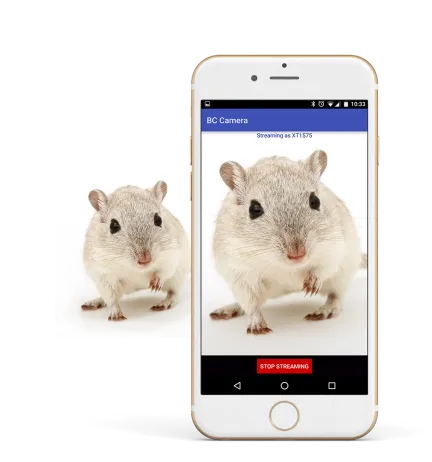
With the BehaviorCloud Camera app, compatible with any mobile device, you can start recording video and viewing your data in real-time. Control trials from any internet-connected computer or a second mobile device. Uploading pre-recorded videos from other sources is also a simple task.
Easily draw zones with BehaviorCloud and automatically generate position and activity data such as distance traveled, latency, velocity, and time spent in zones. For publication purposes, tracked videos and activity traces can be exported.
Invite colleagues to view or contribute to your experiments. Whether it’s data collection, analysis, or monitoring the experiment’s progress, collaboration is effortless. Set permissions to allow collaborators read-only, read/write, or admin access. With BehaviorCloud, you always maintain control of your data.
With BehaviorCloud, conducting high-throughput animal behavior research becomes an accessible and efficient process. Whether it’s in the Morris Water Maze or any other behavioral apparatus, BehaviorCloud provides the tools you need for streamlined data collection and analysis.``` Please adjust this file based on your specific needs and let me know if you need further help!